Why a participatory approach matters in health services planning
30 March 2026
Since 2024, Global Health Partnerships has been exploring how health programming and grant making can take a more participatory approach.
On Day Three of the recent UK Global Health Summit 2026, we were thrilled to host a panel discussion with some leading thinkers in participatory approaches from Institute of Development Studies, University of Edinburgh, Liverpool School of Tropical Medicine, CBM UK and Kenya UK Breast Cancer Alliance.
The discussion explored the nuances, challenges and opportunities of ensuring that the voices of communities are heard and central to project design.
Under our new Scottish Government Health Partnerships Programme (SGHPP) a participatory approach to project design and implementation is critical and will shape GHP’s future work and grant making approaches.
Deborah Crowe, Director of Programme Impact at CBM UK, who was part of the Day Three panel reflects on how the voices of people with disabilities needs to be included in a participant led approach.
The context
One in six people have a disability – that’s roughly 1.3 billion worldwide – and 80% live in low- and middle-income countries. If 1.3 billion sounds overwhelming, it’s roughly 13 – 16% of any health population or patient group. In practice, it means health services should be reaching this proportion of the population in their country. And in conflict settings, this figure is likely to be closer to 20%. But are we seeing these figures in the health case load? Probably not.
The UN Convention on the Rights of Persons with Disabilities (CRPD) was ratified in 2006. Around the world, it has translated to national level legislation seeking to protect and uphold the rights of people with disabilities.
But as anyone working in the health sector knows, diagnoses and interventions often take place at community and district level. This is what can mean the difference between life and death. And that’s the challenge: what are we doing to deliver truly inclusive health services that reach everyone?
Involve the right partners
CBM is a global development and humanitarian federation. We focus on improving the quality of life of people living with or at risk of disabilities in the world’s poorest communities. We do this by centring people with disabilities and their representative organisations at the heart of programme design and delivery. Why? Because they have lived experience and solutions-focused expertise. Often deeply rooted in their communities, they know who is regularly left out, why they are missed, and what it takes to reach them.
Listen to the voices that matter
What this doesn’t mean is placing a burden on Organisations of Persons with Disabilities (OPDs) to solve and provide inclusive services alone. Instead it’s about listening and responding to locally identified priorities. It means allowing partners to take a lead in programme design and assessment; supporting them to advocate more effectively for longer-term systems change; and ensuring frontline healthcare staff are well trained and supported.
This is how we can make health systems inclusive from a person’s very first interaction with it.
Interrogate the data
Age, religion, ethnicity, gender, poverty and where someone lives all affect the type of intervention or support a person needs. For example, women and girls with disabilities might remain hidden because of social norms, safety concerns or household responsibilities that limit their visibility and voice. That’s why it’s critical we use disaggregated data AND population data in programme planning.
Right now, if we analyse a health service or a health intervention, around 4 – 5% of the service users might have a disability. And they’re self-selecting. Often people with more complex or multiple disabilities wouldn’t be reached by mobilisation in the first place.
Scrutinising data correctly can inform effective planning at national and district level. It also ensures we’re not only listening to the loudest voices. A community may not think they have anyone with a disability. But in reality disabled people can be hidden, locked away or forgotten.
By understanding the barriers to inclusion, we can design and deliver services that are sensitive to all requirements and different types of disability.
Breaking barriers in Nepal
Bishna is a visually impaired woman from a remote area of Nepal. For many years, she was excluded from her community and faced stigma around sexual and reproductive health rights (SRHR).
That changed when she joined the CBM-supported Actions for Change project – an OPD-led programme testing new ways of shifting resources and decision-making power to partner organisations. It gave Bishna the opportunity to participate in peer educator training, where she built confidence to run group sessions – including about SRHR – for people with disabilities. As a result, she’s become a role model in her community, inspiring others with disabilities to take an active role in their own empowerment.
The way forward
Bishna’s story is testament to the impact that marginalised people can have when they have the opportunity and resources to lead. And this is essential, because being able to live, work and contribute with a disability is not a nice to have: it is a basic human right. It’s why a participatory approach to workforce development is critical to the future of designing and monitoring effective healthcare delivery that is inclusive across the whole system.
So, the challenge to healthcare programming anywhere in the world is: who uses the service, who has access, and are you serving all the population that you should be serving?
***************************
Find out more about CBM UK’s work, or how we can support your organisation to become more disability inclusive through our advisory services.
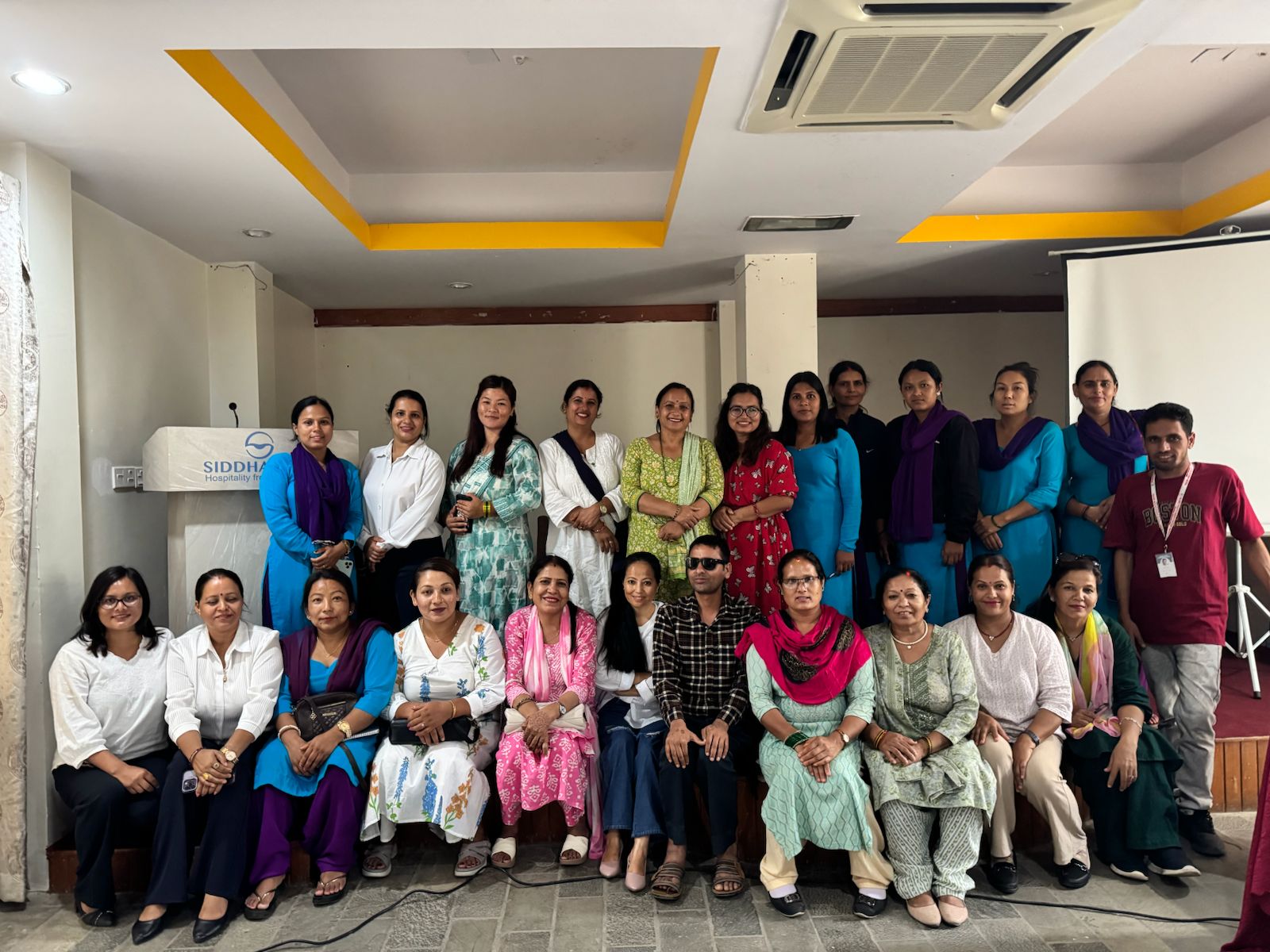 Image: Actions for Change: Health service provider Sexual & Reproductive Health Rights (SRHR) training group (CBM Global / BYAN, 2025)



0 Comments
Leave a comment
Your email address will not be published.