When stewardship shifts power: gender, inclusion and the fight against drug resistance
11 June 2026
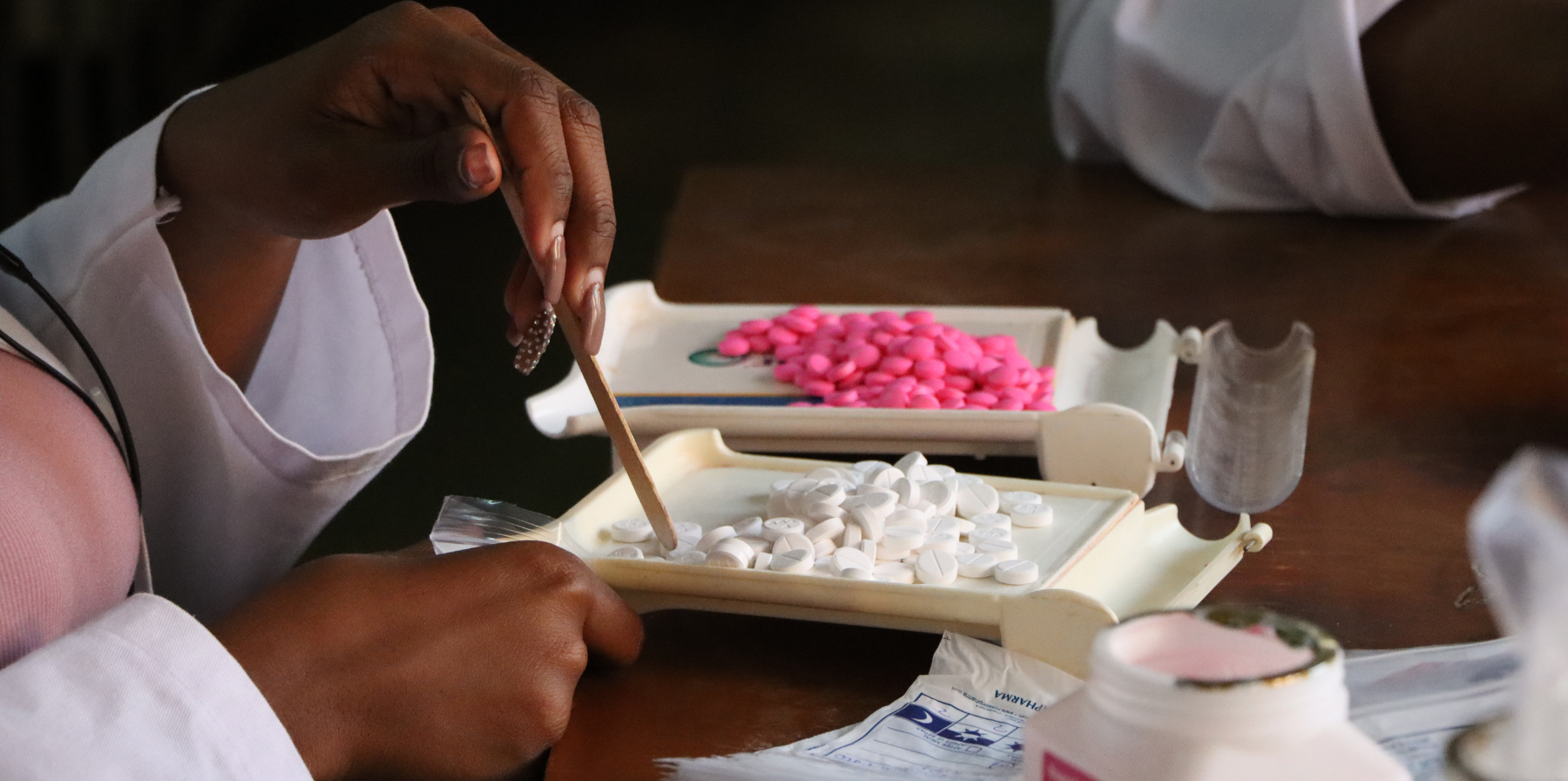
Drug-resistant infections are one of the defining health threats of our time, and the response usually focuses on the technical: better prescribing, stronger surveillance, more reliable laboratories. But a new case study points to something the data alone can miss – that tackling antimicrobial resistance also depends on who is in the room, whose expertise is valued, and which communities are reached.
That challenge now sits within a renewed global mandate. In May 2026, the seventy-ninth World Health Assembly (WHA79) adopted an updated Global Action Plan on Antimicrobial Resistance for 2026-2036, the framework that will steer the world’s response over the coming decade. Alongside familiar priorities such as surveillance and prevention, it places fresh emphasis on the responsible, equitable and sustainable use of antimicrobials, and urges countries to develop and finance ambitious national action plans. Global Health Partnerships warmly welcomes its adoption, which reflects the kind of coordinated, multisectoral commitment that experience shows is essential to turning policy into practice. ‘Equitable’ is where this case study speaks directly to the global agenda.
The Commonwealth Partnerships for Antimicrobial Stewardship (CwPAMS) programme, funded by the UK Department of Health and Social Care’s Fleming Fund and delivered by Global Health Partnerships (GHP, formerly THET) and the Commonwealth Pharmacists Association (CPA) has run since 2019, with its most recent phase concluding in March 2026. Working across eight African countries – Ghana, Kenya, Malawi, Nigeria, Sierra Leone, Tanzania, Uganda, and Zambia – and the UK. The programme pairs health institutions in long-term partnerships and has shown how targeted investment can drive measurable improvements in antimicrobial stewardship (AMS), infection prevention and control (IPC) and medicines optimisation, while equipping thousands of health workers with practical stewardship skills. Its wider impact is set out in the CwPAMS Impact Report 2026.Within the programme, GHP commissioned a gender equality and social inclusion (GESI) study authored by Dr Katy Davis and Dr Rosie Steege of the Liverpool School of Tropical Medicine. The authors set out to test whether the programme’s commitment to gender equality and social inclusion was producing real change in partner countries or simply good intentions on paper.
Across the twenty selected partnerships assessed, the findings were encouraging. They were measured against the Global Health Partnerships’ Gender Responsive Assessment Scale, adapted from the World Health Organization, which ranks initiatives from those that ignore or reinforce inequality through to those that transform the power relations driving it. These were not abstract gains. These changes were felt by health workers and communities across the partner countries.
Real change in partner countries
In northern Kenya, one partnership reached pastoralist communities that had been entirely outside the health system’s stewardship efforts. It trained four women elders as “AMR guardians” and as a result, women were increasingly consulted on antibiotic use in communities where leadership had long been male dominated. A power dynamic that had held for generations began to shift.
In Zambia, a community radio programme designed to engage people with visual and hearing impairments, mental health service users, orphans and others rarely targeted by health messaging reached more than a thousand people. Communities became more confident to demand accountability from the officials who regulate local medicine stores – even asking to see proof that drug shops were legally registered.
In Uganda, putting nurses at the centre of stewardship raised their standing within hospitals and began to rebalance long-entrenched hierarchies between nurses and doctors. In Ghana, women pharmacists were supported into leadership roles, and partnerships introduced safeguarding processes and adjusted training schedules so that women with childcare responsibilities could take part. Health facilities adapted materials for people with disabilities; one built handwashing stations at heights children and wheelchair users could reach.
These examples matter because they move beyond counting how many people attended a training. As the authors stress, the true measure of success is whether norms, power and access shift, and in these partnerships they did.
Importantly, the learning ran both ways. UK and African health workers alike came away with a sharper understanding of the barriers different groups face. The presence of a fellow with a visible physical disability in a leadership role in Uganda, for instance, shifted attitudes and encouraged others, serving as a reminder that inclusion changes the people delivering care as much as those receiving it.
A practical blueprint for funders
For anyone investing in global health, the most useful finding is that transformative impact proved highly achievable. The partnership that achieved the most started with a simple step: a short analysis of gender and inclusion dynamics at the very beginning, which then shaped everything that followed. The authors now recommend this for every partnership.
The study is candid about its limitations: it draws on brief, self-reported data, and deeper change takes time to show. But its recommendations are clear and transferable. Design for inclusion from the outset rather than adding it as an afterthought. Invest in institutions, not just individuals, so progress survives staff turnover. Align with national priorities so that equity is put front-and-centre as the new Global Action Plan calls for. And create space for partners in different countries to learn from one another, because the challenges they face – entrenched norms, stretched resources – are remarkably similar.
This study is timely. As governments begin translating the 2026-2036 plan into national commitments, the evidence from CwPAMS shows what the call for equitable stewardship looks like on the ground, and that with modest, well-designed efforts, broadening who has a say in their own health system is achievable.
This case study was commissioned by Global Health Partnerships and authored by Dr Katy Davis and Dr Rosie Steege of the Liverpool School of Tropical Medicine. CwPAMS was funded by the UK Department of Health and Social Care’s Fleming Fund – a UK aid programme supporting countries across Africa and Asia to tackle antimicrobial resistance – and delivered by Global Health Partnerships (formerly THET) and the Commonwealth Pharmacists Association (CPA).



0 Comments
Leave a comment
Your email address will not be published.