From Conversation to Collaboration: The Journey of the UK-Zimbabwe Health Partnership
9 July 2026
African Proverb
It is often said that big things come from something small. I remember those early conversations I had in London with my Zimbabwean diaspora colleagues Chris Dzikiti, Jesca Gudza and Dr Brighton Chireka. We reflected on what we were already doing individually to support the health system back home, often self-funded and fragmented, and asking ourselves a simple question: what could we achieve if we worked together through partnership.
We could clearly see the gaps that large-scale health workforce migration had created in Zimbabwe’s health care system. We also knew the strength of our diaspora, with many Zimbabwean health professionals working across the NHS, many in leadership roles.
We had seen how other diaspora communities (Nigerian, Ugandan and Ghanaian) had organised themselves into strong, collective networks. They were not just giving but building structured partnerships that enabled genuine bi-directional learning.
We knew even back then that the potential for that kind of collaboration between Zimbabwe and the UK was phenomenal. This isn’t just about what the UK could offer. There was just as much to learn from Zimbabwe, particularly in managing non-communicable diseases and delivering health innovation in resource-constrained settings.
Over time, those conversations evolved into something more concrete. We brought our ideas to Global Health Partnerships (formerly THET), and they listened. With support from the UK Foreign, Commonwealth & Development Office (FCDO) in Zimbabwe, and the Government of Zimbabwe, the UK-Zimbabwe Health Partnership Pilot (UKZHPP) programme was born. It was wonderful to have the support of Dr Beccy Cooper throughout the grant selection process. Her engagement was particularly poignant when we hosted the Zimbabwean health delegation in London. The round table discussion we had was highly dignified and provided further evidence of mutual learning and benefit.
The official launch, on a warm summer’s day in January 2025 in Harare, marked a defining moment. It brought together stakeholders from across Zimbabwe and the UK, united by a shared purpose to strengthen health systems through partnership and collaboration.
I remember the conversations at the launch vividly. There was a real sense of momentum in the room, a renewed alliance grounded in a shared history between Zimbabwe and the UK and a shared commitment to improve health outcomes where it mattered most.
As the health partnerships funded through the programme were introduced, I was particularly proud of the diversity, ambition and geographical reach of the programme. The Zimbabwe Nurses and Midwives Association (ZIMNA) health partnership with the Zimbabwe Nurses Midwives Council delivered Basic Life Support training for nurses in Parirenyatwa and Sally Mugabe hospitals, reinforcing the central role of nurses and midwives in strengthening health systems.
Another bold and innovative health partnership between The Zimbabwe Life Project and the Zimbabwe Health Service Commission initiative sought to strengthen the oversight regulatory tool for Zimbabwean parliamentarians. health. The partnership generated tangible results and encouraged measurable behavioural changes and organisational change.
The Binga District Hospital, through the Zimbabwe Midlands State Midlands University and the Coventry University explored opportunities to improve our understanding of a rare form of diabetes affecting rural populations. Meanwhile, the partnerships between East London Foundation NHS Trust and Ingutsheni Hospital on mental health, and between Association of Breast Surgery and United Bulawayo Hospitals on breast cancer care, highlighted the importance of integrated, multi-disciplinary approaches, recognising that physical and mental health cannot be treated in isolation.
What connected all of these efforts was a shared commitment to learning from one another and adapting approaches to local contexts.
From the outset, it was clear that UKZHPP’s success would depend on meaningful diaspora engagement. To inform its development, a qualitative research study was carried out with the Zimbabwean diaspora based in the UK. Through focus group discussions and individual interviews, the Zimbabwean diaspora shared their motivation and desire to support the health care system back home; their values based on the spirit of ‘Ubuntu’ – I am because we are.
This insight shaped one of the programme’s most important achievements, the Zimbabwe National Diaspora Engagement Framework for Health. Co-designed between Global Health Partnerships (GHP) and the Ministry of Health and Child Care (MoHCC) and other key government stakeholders, it provides a structured, government-led approach to engaging diaspora health professionals in support of national health priorities. Additionally, the Zimbabwe Skills Database Framework was developed to enable the Zimbabwean government to identify, mobilise and harness diaspora expertise to ensure deployment in priority areas through structured methods. In practical this shifts the position from ‘we know the diaspora exists’ to ‘we know who, where, and what skills are available within the diaspora’
Alongside this, the UK -Zimbabwe Health Partnership Growth Framework establishes a clear system for coordinating and expanding partnerships, aligning them with national priorities, supporting their integration into the health system, and ensuring long-term sustainability.
Looking back, it’s been remarkable to see just how far this programme, and this journey, has come. What began as a handful of conversations amongst diaspora colleagues in London has grown into a nationally recognised framework for diaspora engagement, with established partnerships, tangible results, and frameworks that will continue to guide and structure collaboration into the future.
It is a reminder that meaningful change often starts quietly, in conversations, in shared frustrations, in collective ambition. And it grows through trust, collaboration and collective action.
Perhaps, most importantly, it shows what is possible when diaspora communities are not just contributors, but partners in shaping the future of health systems. The accomplishments under the UKZHPP programme would not have been possible without the support and leadership of MoHCC and the commitment of all stakeholders involved. We would like to thank FCDO and the Government of Zimbabwe for their collaboration over the past two years.
——-
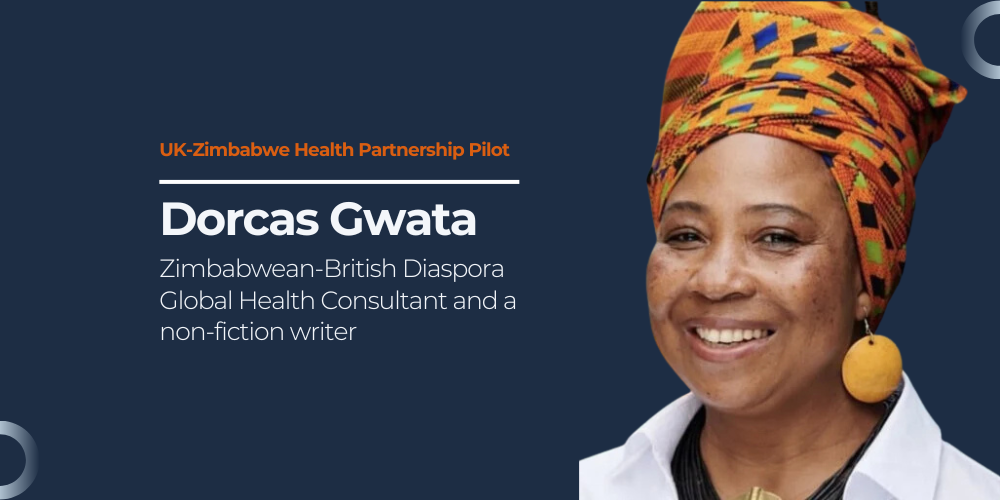
Dorcas Gwata is a Zimbabwean–British Diaspora Global Health Consultant and a non-fiction writer. Her background is front-line nursing in the NHS. Her book ‘The Street Clinic’ explores innovative mental health interventions for young people exposed to youth violence in which she extrapolated lessons from Zimbabwe to the UK.


0 Comments
Leave a comment
Your email address will not be published.