When Safety Shapes Survival: How Somaliland Communities Are Integrating GBV into Maternal Health
11 December 2025
A midwife in Burao
A community-led maternal health programme discovered that true progress depends on dignity, protection, and the prevention of violence.
A quiet shift has been unfolding in rural Somaliland. Community-Based Health Promoters (CBHPs), formerly known as Women Champions, have become the first trusted point of contact for pregnant women and new mothers. Women Champions were initially set up by Global Health Partnerships (formerly THET) and Ministry of Health Development (MoHD) in Somaliland, as a way to embed community-led approaches into maternal health: women and men selected directly from their own communities, working for the wellbeing of mothers and children around them. After demonstrating their impact, the Ministry of Health Development formally integrated them into the national health system, naming them Community-Based Health Promoters and recognising their essential role in community health.
Since 2021, CBHPs have worked through the Saving Mothers at Delivery programme, introduced by Global Health Partnerships (formerly THET) together with the MoHD. Their role goes far beyond delivering health messages. They listen as women speak about fear, pressure at home, early marriage, and harmful practices. It became clear through these conversations that maternal health improves when women feel safe. This insight became the foundation for integrating gender-based violence (GBV) prevention and support into the programme.
CBHPs have strengthened service delivery by linking households to essential care, encouraging early antenatal visits, and ensuring adherence to referrals and follow-up appointments. Their consistent presence bridges gaps between health facilities and families, building trust and increasing uptake of services. By monitoring pregnancies, promoting safe delivery practices, and identifying complications early, they have helped reduce delays in seeking care and improved maternal health outcomes.
The social environment, particularly exposure to GBV, strongly shapes women’s ability to access and benefit from health services. Building on this, the programme now positions CBHPs as key actors in GBV prevention and support, helping women recognise risks, supporting girls to remain in safer environments, offering confidential guidance, and creating secure pathways to care within households and communities.
Strengthening maternal health through trust
By 2025, CBHPs had supported more than 226,533 people and facilitated over 15,000 referrals. Their ability to explain danger signs in simple, respectful language encourages families to seek timely care. A mother in Qalax shared, “Without them, many of us would not know when doctors are visiting or what services are available.”
This trust is reflected in improved health service use:
• 50,506 antenatal care visits
• 10,852 skilled deliveries
• 8,417 postnatal care visits
• 126,067 children immunised
• 226,533 community members reached
Midwives describe CBHPs forming small referral teams, locating women in labour, and organising transport at night. One midwife recalled a CBHP arranging urgent night-time transport for a woman with complications, saving her life.
A stronger link between community and facility
Sixteen health workers completed Basic Emergency Obstetric and Newborn Care training this year. Regular coordination meetings between CBHPs and facility staff improved follow-up for referred cases and enabled quicker responses to complications. These improvements have strengthened confidence across the system. The MoHD has now included the CBHP model in the National Community Health Strategy (2024–2027), recognising its contribution to a more resilient primary health care system. As one policymaker noted, “CBHPs reduce the burden on health facilities and provide essential preventive care.”
Listening to women to understand GBV realities
To meaningfully integrate GBV, the programme first needed to understand how survivors navigate the system. A national assessment led by the Ministry visited health facilities, One-Stop Centers, IDP settlements, and organisations such as WAAPO, NAGAAD, and SWLA. Government ministries and UN agencies were also consulted.
Findings were clear: GBV, child abuse, and FGM/C are widespread. Health facilities lacked essential supplies such as rape kits and emergency contraception. Few providers had received survivor-center training. Many survivors relied on customary systems, and referral pathways were inconsistent.
In response, and with support from Social Development Direct, the national GBV training manual was strengthened to reflect clinical standards and cultural context. Health facilities began preparing focal points who can provide confidential and safe support.
Community voices leading the way
Dialogue sessions in all sixteen communities encouraged open discussion. Sexual violence was raised in Nasahablood and Sheekh Nuur; child abuse and child labour in Wajaale, Koosaar, and Aden Saleeban; FGM/C in Daami C, Sararka, and Hayayaabe; and early marriage in Qalax, Digaale, and Baligubadle. Communities also created informal emergency transport systems and mobilised religious and community leaders to encourage early facility attendance – locally owned solutions strengthening both protection and health.
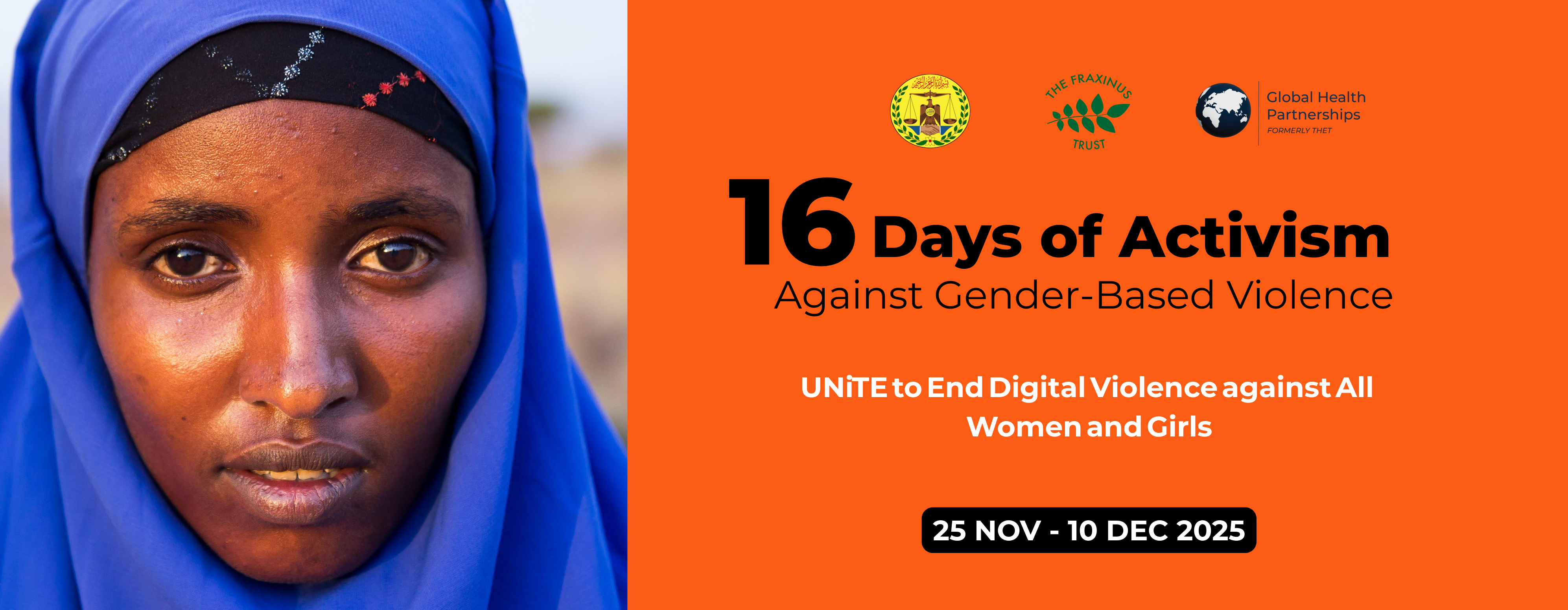
Why this matters during 16 Days of Activism
Integrating GBV into maternal health systems reinforces a simple truth: good health depends on dignity and protection. CBHPs already walk beside women at vulnerable moments. With new tools, stronger policies, and community ownership, they now support survivors, guide them to services, and weave conversations about safety into routine visits.
GHP and the MoHD reviewed the GBV manual and trained sixteen health workers who will cascade training to sixteen communities. During the 16 Days of Activism, frontline experiences informed national dialogue on digital violence, stigma, and safety. The Ministry of ICT announced free ICT training for young women to help prevent online violence.
A midwife in Burao shared, “When women feel safe and respected, they come to the health centre earlier and they keep coming. Safety is part of health.”
Ministry of Health Development (Gender Based Violence) focal point
Closing reflection
Somaliland’s experience shows that maternal health cannot be separated from the realities women face. When safety and dignity are embedded in care, women seek help earlier and protect their own health and of their children. By integrating GBV awareness and survivor-centered support into Saving Mothers at Delivery, communities are reshaping maternal care into a pathway of protection and empowerment. 16 Days of Activism reminds us that ending violence is a health priority, a community commitment, and a systems responsibility. When maternal health programmes priorities safety, they build resilience and long-term wellbeing, transformations that will last long after the campaign ends.