Harnessing Diaspora Engagement: How Young Leaders Are Shaping the Future of Global Health
17 March 2026
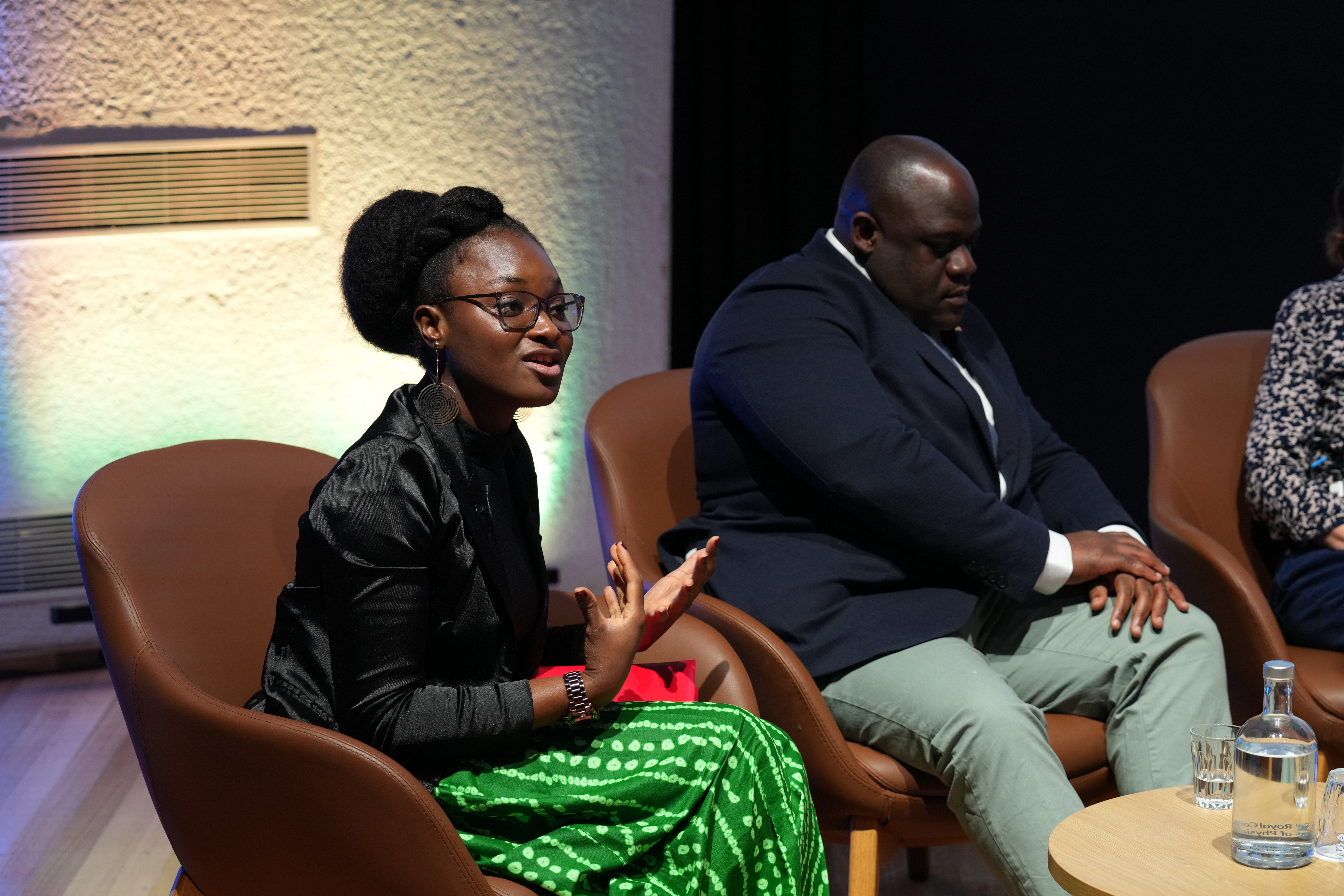
Being part of the UK Global Health Summit 2026 was a fantastic opportunity to contribute to the plenary session on Harnessing Diaspora Engagement. The session explored how diaspora communities contribute to strengthening health system resilience across different contexts and how their expertise, networks, and lived experiences can support more equitable global health partnerships.
Health crises are interconnected.
No matter where we are from or where we live, the health challenges facing one country can quickly affect others.
The World Health Organization have identified antimicrobial resistance (AMR) as one of the most serious global health threats of our time.
Antibiotics that once saved millions of lives are becoming less effective, and without urgent action, drug-resistant infections could cause devastating consequences for global health systems. Addressing this challenge requires coordinated action across countries, sectors, and disciplines.
No single country can solve this alone.
So how do we build health systems that work for everyone, systems that are collaborative, resilient, and ensure that no one is left behind?
For me, part of the answer lies in recognising and strengthening the role of diaspora communities and young people.
Several factors shape how I think about global health collaboration: my research on grassroots interventions for AMR and antibiotic stewardship at the University of St Andrews in the United Kingdom; being a Nigerian researcher, along with being a ONE UK Youth Ambassador, part of a global movement campaigning to create economic opportunities and healthier lives in Africa.
Through my work, I see how young advocates across the UK and globally are shaping conversations about global health financing, vaccine equity, and health system strengthening. Through advocacy, research, and storytelling, young people are helping ensure that global health policies remain accountable to the communities they are meant to serve.
Young people from diaspora communities understand both the realities of health systems in their countries and the institutional structures of countries like the UK. This allows them to translate knowledge across contexts and identify solutions that are both locally relevant and globally informed.
Diaspora youth also act as connectors and bridge-builders.
They create networks between universities, civil society organisations, policymakers, and community groups across borders.
In many cases, they move between cultures and institutions with a level of cultural competence that helps build trust in public health initiatives.
My own research on AMR reflects this kind of engagement.
While I conduct my research in the UK with the support of outstanding scholars and institutions, I also work closely with communities in Nigeria.
Through participatory workshops and community engagement activities, community members co-produce public health communication materials on responsible antibiotic use. These include posters, short films, and community-based messaging designed to reflect local realities.
We co-create solutions that connect global health research with local knowledge and community experiences. This project won the Scottish Graduate School of Social Science (SGSSS) Achieved Impact Award, highlighting the value of community-driven approaches to global health challenges.
But while global health commitments often emphasise equity and partnership, there are still gaps between high-level commitments and the lived realities of young people, even in diaspora communities.
One of the biggest gaps is representation in decision-making spaces. Young people should have real influence over policy design, research agendas, or funding priorities. The voices of youth remain underrepresented in many global health leadership structures.
Another challenge is access to resources and opportunities. Many young professionals have the skills, ideas, and networks needed to contribute to global health initiatives, but they often face structural barriers such as limited funding pathways, lack of institutional support, and insufficient recognition of diaspora-led initiatives. For young women, these barriers can be even more pronounced, as gender norms and structural inequalities may limit opportunities for leadership.
Despite these challenges, one of the most hopeful developments in global health today is the growing innovation found among young people.
Young leaders are increasingly using digital platforms, community networks, and innovation spaces to contribute to health system development across borders.
Through social media campaigns and digital advocacy movements, we are raising awareness about issues such as vaccine equity, AMR, global health financing. These digital spaces allow young advocates to influence public discourse and mobilise communities both in the UK and in other countries. We are also seeing young leaders contributing through research collaborations, mentorship programmes, and social entrepreneurship.
We are innovators, researchers, advocates, and partners in shaping health systems.
The theme of the 2026 UK Global Health Summit is Shaping Tomorrow’s Health, together. And the word that resonates most strongly with me is together.
Together means recognising that health challenges are shared.
It means valuing the knowledge and experiences of communities, researchers, policymakers, and diaspora networks alike and building partnerships based on mutual respect, shared responsibility, and progress.
There is a popular saying in Nigeria: A na-ebido n’ututu choba ewu oji tupu chi eji – it is better to start early before it becomes too late.
If we want resilient health systems for the future, we must start now by recognising and supporting the role of young leaders.
Wherever they are.



0 Comments
Leave a comment
Your email address will not be published.