Partnership, Not Aid: Frontline Leadership in the UK–Zimbabwe Health Partnership
3 March 2026
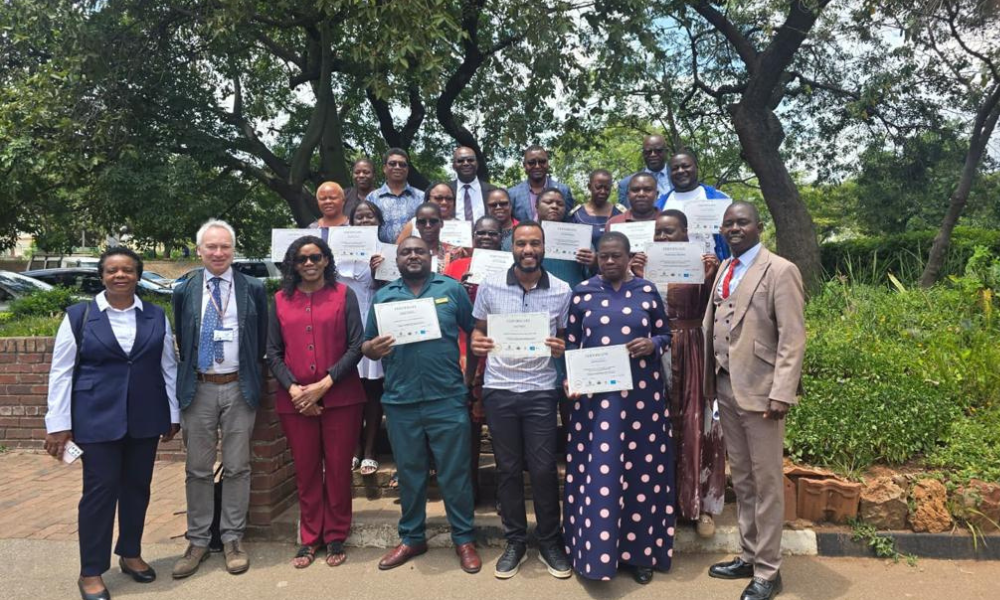
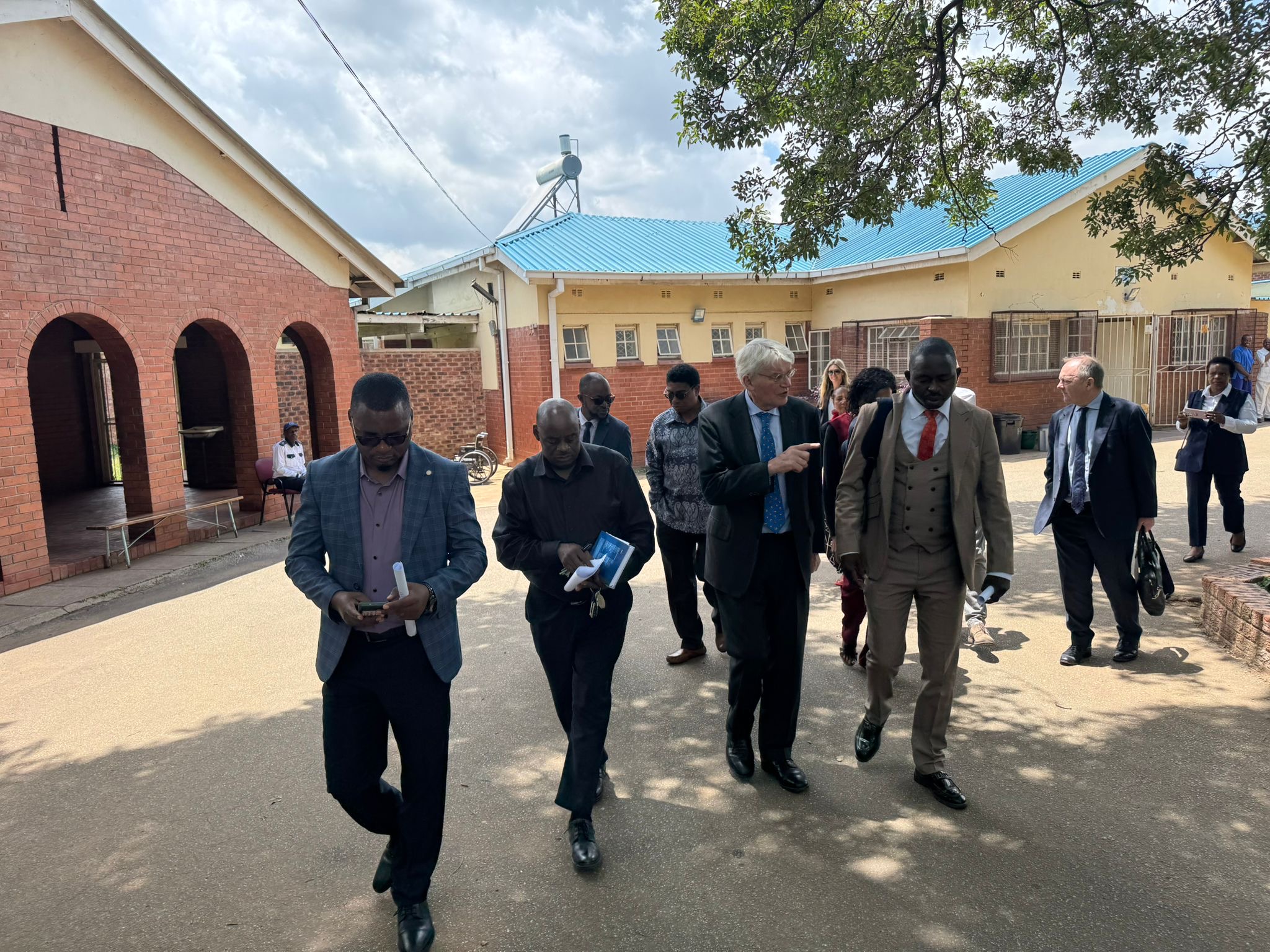
Last week, we had the privilege of speaking at a reception hosted by the British Ambassador Pete Vowles, celebrating the progress made in the UK–Zimbabwe Health Partnership Pilot Programme. We were joined by Sir Andrew Mitchell and colleagues from across the Zimbabwean and UK health communities, and we heard a powerful message from Douglas Tendai Mombeshora, Zimbabwe’s Minister of Health and Child Care.
This programme, the Minister said, is “not about aid — it is about true partnership.” As staff working for Global Health Partnerships (GHP), we think this is the highest compliment we could receive. Because that is precisely what this initiative is designed to embody.
Douglas Tendai Mombeshora, Zimbabwe’s Minister of Health and Child Care.
A programme rooted in strategy — and in solidarity
The UK–Zimbabwe Health Partnership Pilot (UKZHPP) is funded by the UK’s Foreign, Commonwealth and Development Office (FCDO) and managed by GHP from mid-2024 to March 2026. Its purpose is clear: to strengthen Zimbabwe’s health workforce through mutually beneficial institutional partnerships, fully aligned with the Ministry of Health and Child Care’s Health Workforce Investment Compact 2024–2026.
This programme has two strategic objectives:
- To strengthen political commitment to long-term UK–Zimbabwe health sector collaboration.
- To pilot six health partnerships designed to address workforce priorities identified by the Ministry itself.
At national level, this has meant high-level delegations, engagement with NHS England, DHSC, Royal Colleges and universities, and – critically – the establishment of a national oversight mechanism to ensure alignment with the Ministry of Health and Child Care and the Health Services Commission.
It has also included drafting a Health Partnership Growth Framework and a structured Diaspora Engagement Framework, enabling Zimbabwean health professionals in the UK to contribute sustainably to clinical care, training, mentorship and system leadership. The technical assistance that GHP is providing has been done in consultation and collaboration with the MoHCC and other national stakeholders, both in Zimbabwe and the UK.
From a programme management perspective, this architecture is essential. It ensures that frontline innovation is embedded within government systems, that partnerships are accountable, and that learning can be scaled beyond individual institutions.
Frontline clinicians at the heart of change
Strategy alone does not save lives. Health workers do.
Across Zimbabwe — in Bulawayo, Mutoko, Harare, Masvingo and beyond — clinicians are investing extraordinary effort to translate partnership into improved care.
- At United Bulawayo Hospitals, working with the Association of Breast Surgery, more than 119 healthcare workers have received hands-on clinical skills and ultrasound training. A draft Diploma in Breast Disease Management has been developed, surgical masterclasses delivered, and referral pathways strengthened .
- At Luisa Guidotti Hospital, in partnership with Buckinghamshire Healthcare NHS Trust, 89 midwives and cascade trainers have been trained across multiple districts. Simulation-based learning labs have been established, early reductions in perinatal mortality are being reported, and learning has flowed back to the UK through improvements in midwifery practice .
- Through the partnership between East London NHS Foundation Trust and Ingutsheni Central Hospital, more than 100 staff have been trained in WHO mhGAP tools, strengthening mental health capability across specialist and non-specialist settings .
- The Zimbabwe Life Project, working with the Health Services Commission, has strengthened governance and leadership capacity among Provincial and District Health Executives, and piloted parliamentary oversight tools to improve accountability .
- ZIMNA-UK, partnering with the Nursing and Midwifery Directorate, has trained more than 60 healthcare workers in Basic and Advanced Life Support at Parirenyatwa and Sally Mugabe Hospitals, with demonstrable improvements in clinical confidence and patient outcomes .
- Coventry University and Midlands State University are preparing to accelerate non-communicable disease training and capacity-building in Binga District, including the provision of essential diagnostic equipment .
Behind every statistic is a frontline professional: a nurse leading resuscitation training; a mental health practitioner integrating new tools into community care; a district leader strengthening governance under real pressure. Their commitment is the foundation of this programme’s success.
Diaspora leadership and mutual learning
A distinctive feature of the UKZHPP has been its deliberate engagement of the Zimbabwean health diaspora in the UK. The structured approach being developed — addressing licensing, registration, visa facilitation and government focal points — is designed to make diaspora contribution more coordinated, more sustainable and more impactful .
Equally important is the principle of reciprocity. UK clinicians are not simply providing support; they are learning — about resilience, innovation under constraint, and community-centred approaches to care. The influence on UK maternity practice is one example of genuine bilateral exchange .
As programme stewards, we believe this is the future: structured, government-aligned, workforce-focused partnerships that strengthen both systems.
A model for long-term collaboration
The forthcoming visit of Minister Mombeshora to London, for the UK Global Health Summit and a series of bi0lateral meetings, signals the seriousness with which Zimbabwe approaches this partnership. The support of FCDO has enabled more than a set of discrete projects; it has enabled a platform for sustained institutional collaboration.
For us at GHP — from strategic leadership through to day-to-day programme delivery — this initiative demonstrates what is possible when frontline professionalism is matched with political commitment and thoughtful design.
It is not about aid.
It is about shared responsibility for building a stronger health workforce — and stronger health systems — together.





0 Comments
Leave a comment
Your email address will not be published.