Jobs
By working with us, you can help us achieve our goal of ensuring everyone, everywhere has access to quality healthcare.


In the past ten years THET has reached over 100,000 health workers across 31 countries in Africa, the Middle East and Asia in partnership with over 130 UK institutions.
GHP offers a range of benefits including hybrid working, 25 days annual leave (pro-rata) plus 3 days winter closure between Christmas and New Year; 5% pension contribution when Employee contributes 3%.
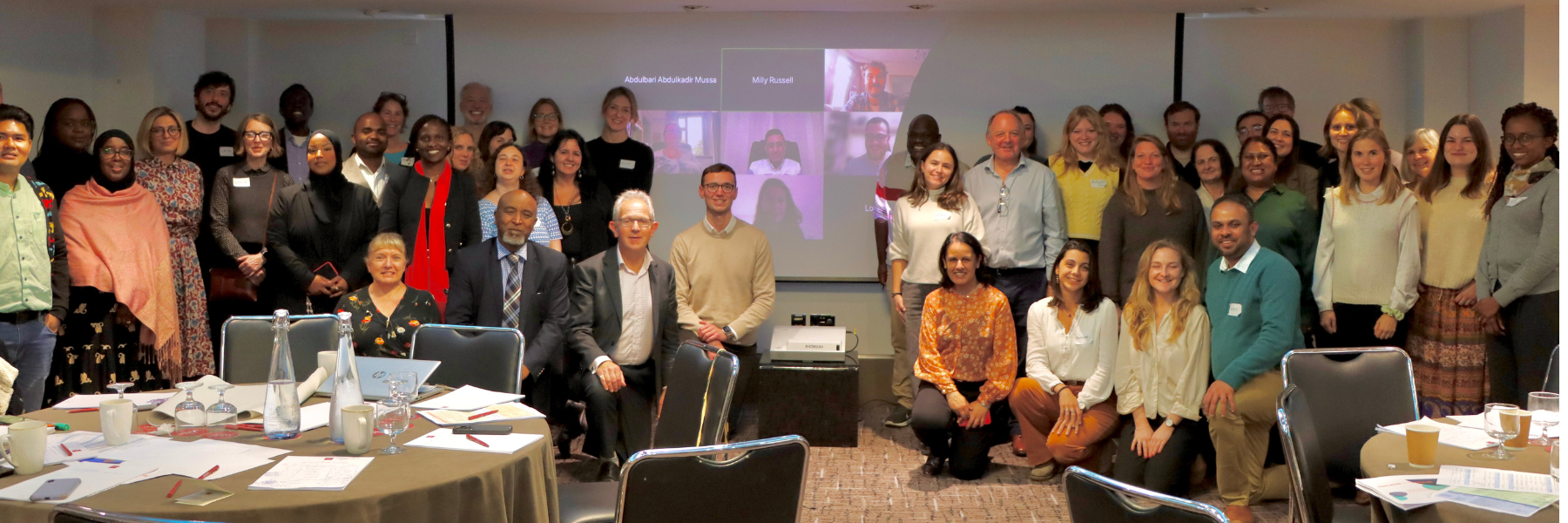
GHP is an exceptionally friendly place to work, and we have maintained this reputation throughout the challenges of the COVID-19 pandemic.
Current opportunities
HTMI-MCH Baseline Assessment and Comprehensive Baseline Report
Location:
Lusaka and the Copperbelt Provinces
Contract Type:
Consultancy
Key Responsibilities:
Consultancy to Support the HTMI-MCH Baseline Assessment and Comprehensive Baseline Report
1. Background
Global Health Partnerships (GHP), with funding from the CRI Foundation and in collaboration with the Ministry of Health (MoH), is implementing the Strengthening Maternal and Child Health through Integrated Health Technology Management (HTMI-MCH) Project in Zambia from mid-2026 to 2029.
The project will be implemented in selected MCH facilities in Lusaka and Copperbelt Provinces and aims to improve access to quality maternal and child health services through strengthened health technology management systems. Key areas of intervention include improving the functionality and maintenance of critical MCH equipment; strengthening Biomedical Equipment Technician (BMET) and health-worker capacity; improving medical-equipment management, reporting and referral systems; strengthening biomedical engineering training through NORTEC and Evelyn Hone College; and generating evidence on patient reach and the financial benefits of strengthened health technology management.
2. Purpose of the Consultancy
The Ministry of Health, with technical support from GHP, seeks a suitably qualified consultant or consultancy firm to work alongside GHP and designated Ministry of Health technical personnel to undertake the HTMI-MCH baseline assessment.
The consultant leads the assessment, data management, analysis and reporting; MoH technical personnel contribute specialist biomedical engineering and medical-equipment expertise.
The assignment will:
- establish baseline values against the finalised HTMI-MCH Results Framework;
- identify technical, workforce, institutional and health-system gaps relevant to project implementation;
- generate evidence to guide project priorities, including training, equipment maintenance, spare parts, reporting systems and institutional strengthening; and
- produce a baseline assessment report suitable for donor submission, with clear findings, recommendations and next steps.
Assignment Period
The assignment is expected to take approximately eight calendar weeks from the agreed commencement date. Exact dates will be confirmed after GHP finalises the facility schedule and confirms stakeholder availability.
Apply for this role
Fieldwork: Weeks 3-4
Draft baseline package: End of Week 6 / early Week 7
Validation: Week 7
Final baseline package: End of Week 8A detailed TOR is attached.
Programme Officer — Track 3 (Institutional Strengthening)
Location:
Damascus, full-time (in-country)
Contract Type:
Fixed-term (17 months of substantive activity, assuming a November 2026 start)
Salary:
1100 Euro per month, gross
Reporting To:
GHP Senior Program coordinator; works closely with the Specialty technical Committees (STC)
Key Responsibilities:
The UFUQ Programme
The UFUQ Programme supports the rebuilding of postgraduate medical training for Syrian doctors, working across four specialties: Emergency Medicine, Anaesthesia, Obstetrics and Gynaecology, and Psychiatry. It brings together relevant Syrian local stakeholders such as the Scientific Councils along with established international medical colleges and societies, and Global Health Partnerships (GHP), which coordinates the programme together with UOSSM. UFUQ is funded by the European Union; GHP is the employing entity for this role.
The programme has several linked strands of work. One strand (track) delivers postgraduate diploma training directly to trainees. This role sits within Track 3, Institutional Strengthening, which focuses on a different but connected goal: helping each Scientific Council build the internal governance, standards, and continuing-education systems it needs to run its own specialty training over the long term, so that capability remains in Syria once the programme ends.
Track 3 builds on two years of prior work in North-West Syria. Following the liberation and the programme’s expansion to cover the whole country, the scope of this work has been revised accordingly. Contracting is complete with two of the four international partners, and is in progress with the remaining two.
The Track 3 Standard Operating Procedures
Track 3’s day-to-day work is guided by a single reference document, referred to here as “the SOP”. It sets out, step by step, how the three main outputs of Track 3 are produced, reviewed, and approved: an Operational Manual for each Scientific Council, a set of priority Clinical Guidelines, and a framework for continuing medical education. The SOP also sets out who is responsible for each step, how quality is checked at each stage, and how progress and problems are tracked and reported over the programme’s life. The SOP will be reviewed on a regular basis considering emerging needs and priorities of implementation and the position holder will play a key role in informing this iterative development. The SOP and governance structures are themselves being formalised during this contract period, so part of the first few months genuinely involves bedding in a new system alongside Syrian counterparts, not just running an established one.
Key Responsibilities
2.1 SOP implementation and workplan management
- Own, apply and refine the Track 3 SOP as the context requires for all four specialties, ensuring activities proceed in the sequence, timing, and ownership model it defines. (for example coordinating the stakeholder mapping and conference funding application in collaboration with the technical team)
- Track delivery of the standardised workplan phase by phase (Foundation, Development, Consolidation, plus
cross-cutting activities) and flag schedule risk early. - Coordinate the parallel drafting processes across the four specialties so outputs remain structurally coherent
without becoming templated or losing specialty-specific content. - Ensure Phase 0’s Institutional Reality & Mandate Mapping and Legal/Mandate Validation are completed before Manual drafting begins, and keep each specialty’s standing committees to a Minimum Viable
- Governance Structure (2–3 core committees, expanded only where capacity and demonstrated need justify it) rather than the full illustrative list.
2.2 Deliverable oversight and quality assurance
- Lead the standard document-review procedure for all three deliverables: structural/template compliance review, cross-specialty coherence check, coordination of GESI review, STC multi-stakeholder review, and preparation for Scientific Councils/Professional Associations sign-off.
- Maintain the checklist evidence log and confirm no deliverable is marked complete without documented without GHP quality sign-off from the GHP technical group.
- Safeguard the co-production and ownership standard specifically: confirm Arabic-primary drafting on the Operational Manual, SC/PA members named as co-authors, and evidence of at least two co-production workshops per specialty per phase.
2.3 Governance and stakeholder coordination
- Support and, where chaired by GHP, help run the monthly Specialty Technical Committee (STC) meetings, keeping Operational Manual implementation and deliverable status as a standing agenda item. Represent the STC as a GHP-facilitated coordination platform outside the Ministry of Health
• Support facilitating and Coordinating the monthly GHP–International Counterpart bilateral and maintain the joint risk log.
• Coordinate quarterly Track 1 / Track 3 discussions with AICPD on curriculum and accreditation, applying the SOP’s baseline-dependent sequencing.
• Define and review Dependency & Contingency Matrix so a Track 1 delay is flagged before it cascades into SC endorsement or accreditation-work delay.
• Hold structured, candid conversations with SC and PA members — separately from the International Counterpart — to assess institutional and relational progress, not only outputs.
2.4 Monitoring, evidence and reporting
- Conduct document review against Output indicators and maintain the Success Checklist evidence log on a continuous basis. Treat indicator wording as intentionally general — deliverable content specifics are a floor set by the templates and remain to be agreed with the SC/Syrian Board, not fixed unilaterally by this role.
- Prepare quarterly progress and financial reports, the annual report, and the three structured phase review reports (Month 4, Month 12, Month 18–19).
- Ensure all reporting narrates warning indicators transparently, whether or not yet resolved.
2.5 Risk and warning indicator management
- Identify and log warning indicators as soon as they arise, without waiting for a scheduled review point.
- Raise active warning indicators in the GHP–International Counterpart bilateral and agree specific, timebound corrective action as per escalation steps in the SOP.
Apply for this role
Follow the link below to access the full Terms of Reference for this role
You can apply for this role by submitting both a cover letter and CV through the following: link
Deadline for applications is midnight – Tuesday, 20th October


